The Engineering With Nature® (EWN®) program is pleased to announce the release of the Engineering Practice Guide for Oyster Reefs: A Natural Infrastructure Approach for Coastal Systems, the second publication in a growing series of Engineering Practice Guides for Natural Infrastructure.
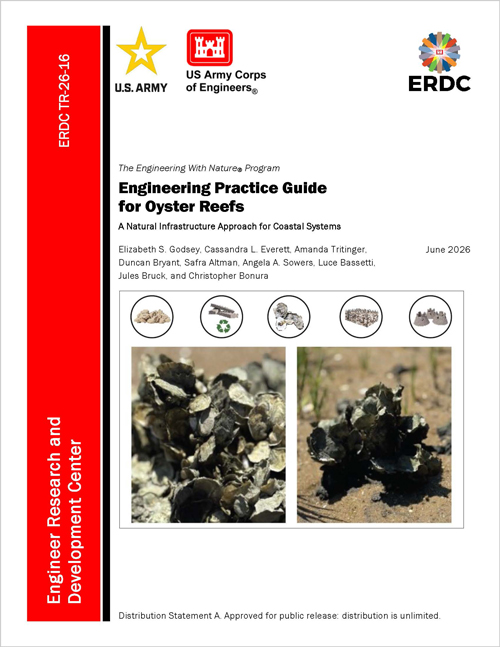
Engineering Practice Guide for Oyster Reefs — currently available
The new guide supports engineers, ecologists, and interdisciplinary teams in designing oyster reefs as natural infrastructure. It brings engineering and ecological principles together to help practitioners evaluate site conditions, project objectives, performance, costs, risks, and long-term sustainability.
Well-designed oyster reefs can provide multiple benefits, including attenuating wave energy, influencing sediment transport, stabilizing shorelines, creating habitat, and supporting estuarine productivity. The guide provides a practical framework for considering these functions when developing oyster reef projects for coastal systems.
Building a Library of Engineering Practice
The oyster reefs guide follows the Engineering Practice Guide for Floodplain Benching, the first publication in the series. Together, these guides are building a technical resource for practitioners seeking to incorporate natural infrastructure into water resources projects.
Five additional Engineering Practice Guides are currently in development:
- Wood-Based Riverbank Stabilization
- Tidal Flow Reconnection for Wetlands
- Cobble and Gravel Beach Design
- Leaky Structures
- Vegetated Bank Biostabilization
As the collection grows, these guides will provide practitioners with an expanding technical foundation for incorporating natural infrastructure and hybrid approaches into inland and coastal water resources projects.
Explore the Engineering Practice Guides for Natural Infrastructure.