The Engineering With Nature® (EWN®) initiative is proud to share a new publication led by the U.S. Army Engineer Research and Development Center (ERDC) that explores how emerging technologies can reshape the future of coastal infrastructure.
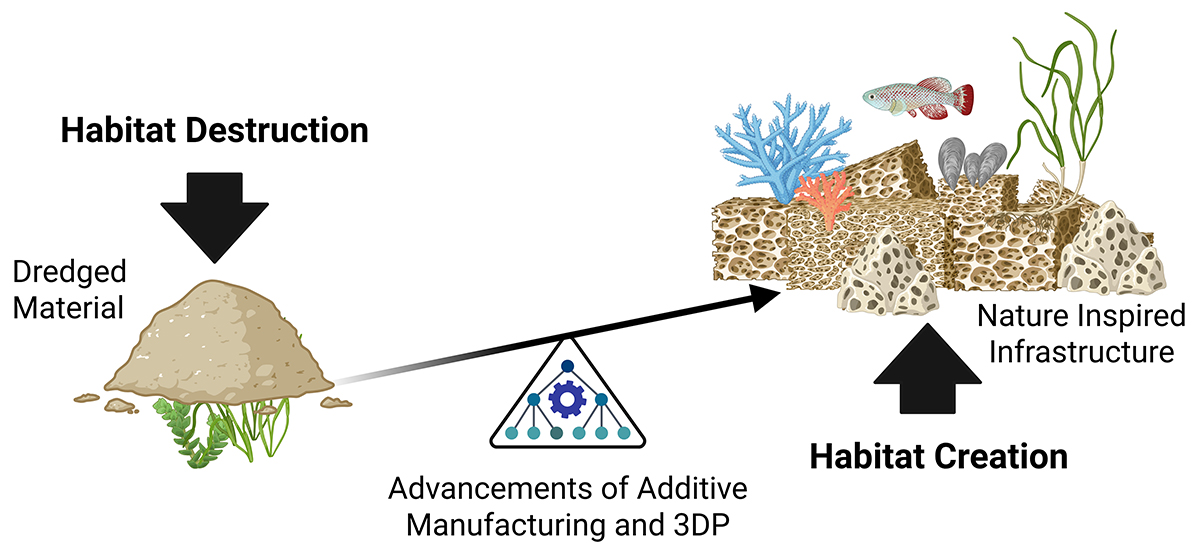
Developed by ERDC’s Environmental Laboratory (EL) and Geotechnical and Structures Laboratory (GSL), in collaboration with partners across the U.S. Army Corps of Engineers (USACE) and the broader research community, the article—“Building Tomorrow: Unlocking the Potential of Additive Manufacturing to Revolutionize Coastal Infrastructure”—is now available in Integrated Environmental Assessment and Management.
Rising Risks: Coastal Infrastructure Under Pressure
Coastal infrastructure is increasingly vulnerable to storms, erosion, and other natural hazards. At the same time, traditional approaches to infrastructure development often struggle to incorporate environmental benefits or adapt to changing conditions. There is a growing need for innovative, scalable solutions that not only protect infrastructure but also enhance ecosystem performance and resilience.
A New Approach: 3D Printing Meets Nature-Based Engineering
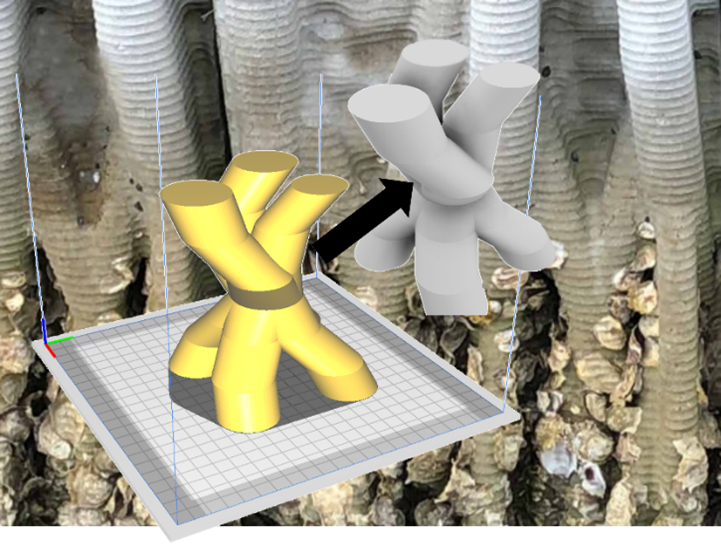
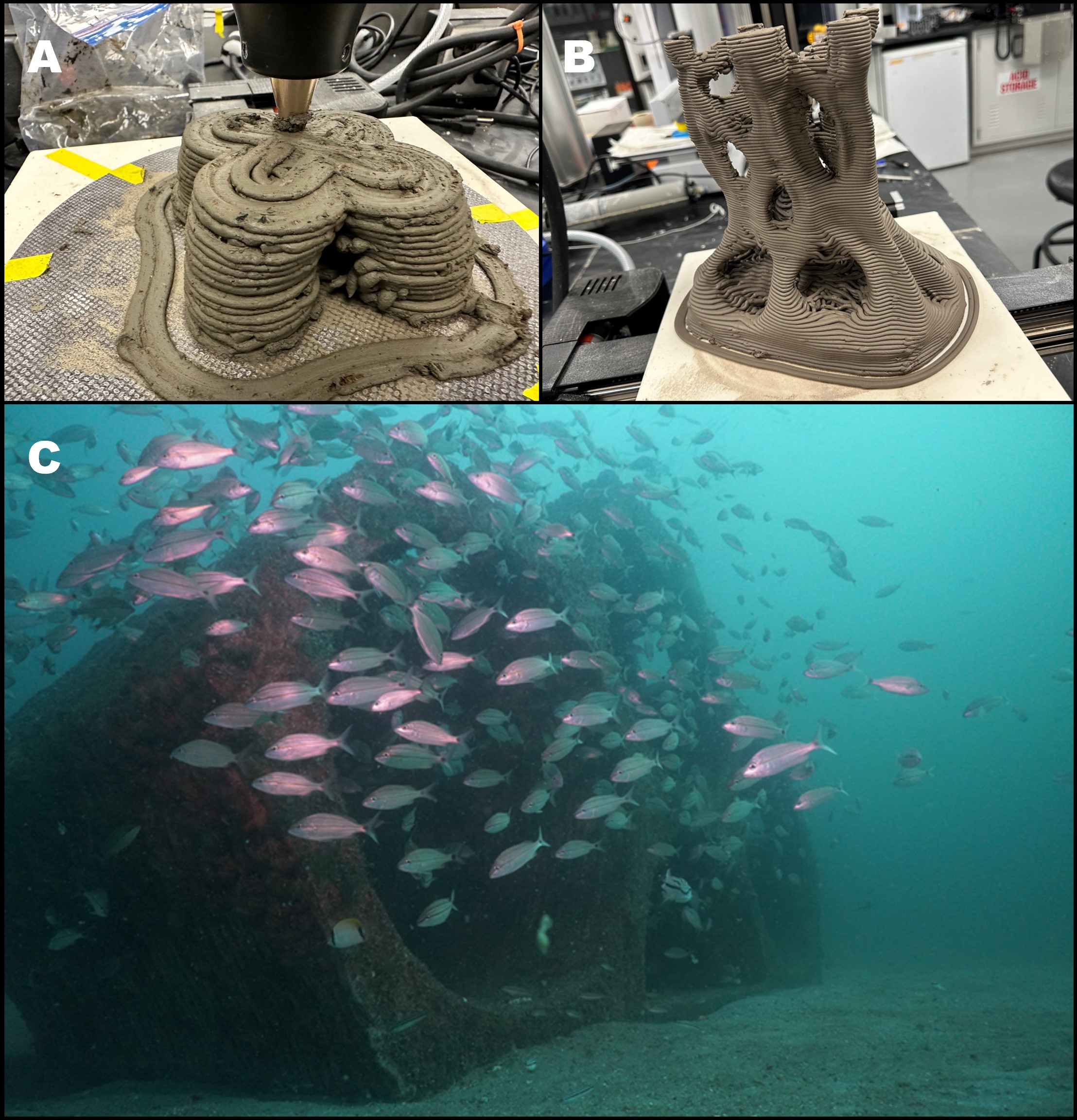
This publication highlights the potential of additive manufacturing (AM) and 3D printing (3DP) as transformative tools for coastal engineering. Drawing on insights from a collaborative ERDC-led workshop, the paper synthesizes current science and applied practices to:
- Advance nature-inspired, sediment-based infrastructure aligned with EWN® principles
- Identify key challenges such as material standardization, performance validation, and field implementation
- Outline actionable pathways to move these technologies from research into real-world application
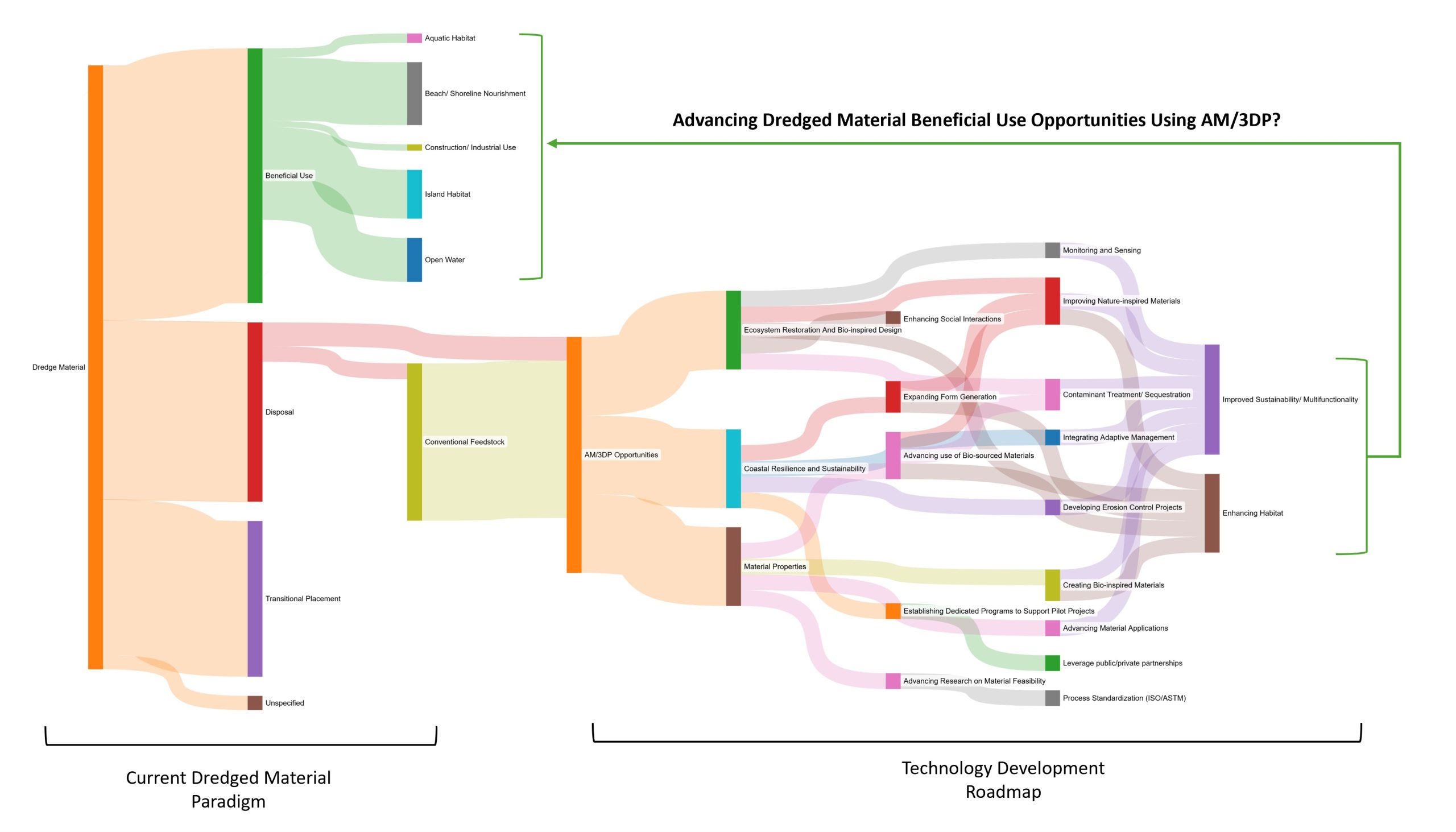
The article also introduces a technology development roadmap that connects research with operational decision-making, helping practitioners better understand opportunities, constraints, and next steps.
Looking Ahead: A Roadmap for Scalable, Multi-Benefit Solutions
This ERDC-led publication defines a clear path forward for using additive manufacturing and 3D printing to improve coastal infrastructure. The roadmap emphasizes:
- Expanding the beneficial use of dredged material
- Delivering scalable, nature-inspired solutions that enhance resilience
- Supporting multi-benefit outcomes, including habitat integration, environmental monitoring, and carbon strategies
- Advancing Engineering With Nature® (EWN®) practices and “greening” existing infrastructure
The Engineering With Nature® initiative continues to support research and collaboration that advance innovative, nature-based solutions. This publication represents an important step in bridging innovation and practice—helping unlock new ways to design infrastructure that works with, rather than against, natural systems.
Read the full article: “Building Tomorrow: Unlocking the Potential of Additive Manufacturing to Revolutionize Coastal Infrastructure”