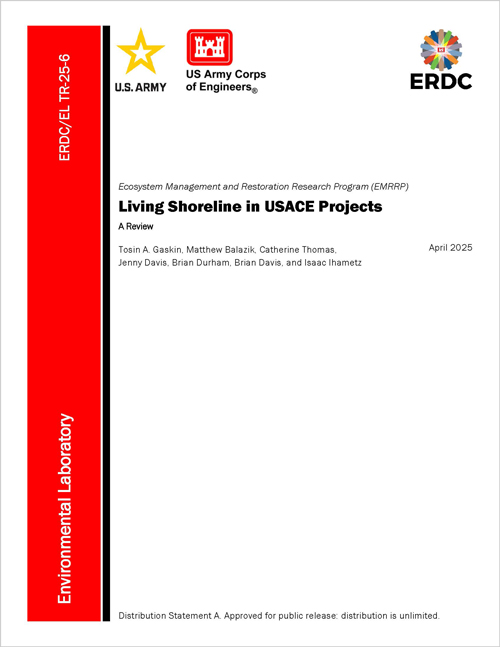
A new report co-authored by Dr. Tosin A. Gaskin, Matthew T. Balazik, Catherine C. Thomas, Jenny L. Davis, Brian D. Durham, Brian Davis, and Isaac Ihametz explores how natural solutions—like marsh grasses, oyster reefs, and fallen logs—can help protect America’s coastlines. The effort was a collaborative endeavor involving the U.S. Army Corps of Engineers Environmental Laboratory, the U.S. National Ocean Service, the University of Virginia School of Architecture, and Mahan Rykiel Associates, Inc.
The report focuses on “living shorelines,” a nature-based approach to shoreline stabilization that maintains the vital connection between land and water. Unlike traditional concrete seawalls or bulkheads, living shorelines use natural materials to reduce erosion while preserving and enhancing coastal habitats.
Encouraged by the National Oceanic and Atmospheric Administration (NOAA) for use along sheltered coasts, living shorelines provide a range of environmental and engineering benefits—from supporting biodiversity to strengthening climate resilience. The authors reviewed scientific literature, agency reports, digital tools, and existing guidance to assess the relevance of these techniques for U.S. Army Corps of Engineers (USACE) projects.
Despite growing interest and application, the report notes that critical knowledge gaps remain—particularly regarding USACE-specific implementation. To bridge this divide, the authors recommend a consolidated planning and design framework tailored to Corps needs, enabling broader use of living shorelines in future infrastructure and habitat restoration efforts.
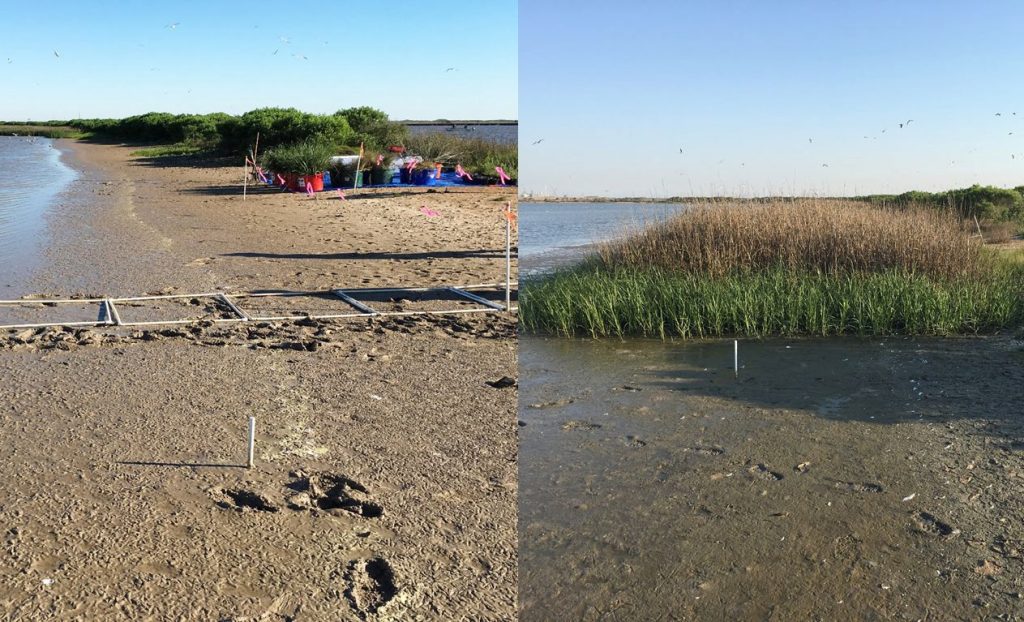
To learn more about Engineering With Nature’s efforts to encourage the incorporation of native plantings with architectural projects, visit the EWN Vegetation page. To read the report,visit the USACE Engineer Research and Development Center library.