
EWN’s Natural Infrastructure Work for Military Mission Readiness Earns National Planning Award
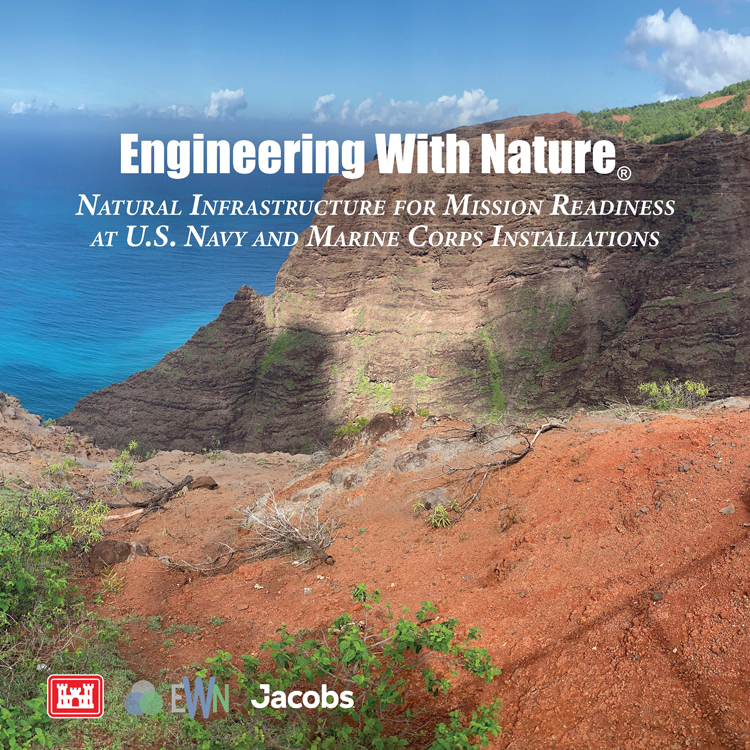
The U.S. Army Engineer Research and Development Center’s Engineering With Nature® (EWN®) program has received the 2025 Outstanding Environmental Planning Project Award from the American Planning Association’s Federal Planning Division for its project, Natural Infrastructure for Mission Readiness at U.S. Navy and Marine Corps Installations. The award recognizes the project’s collaborative approach to integrating natural […]
Engineering With Nature® Releases New Proving Grounds Innovation Handbook
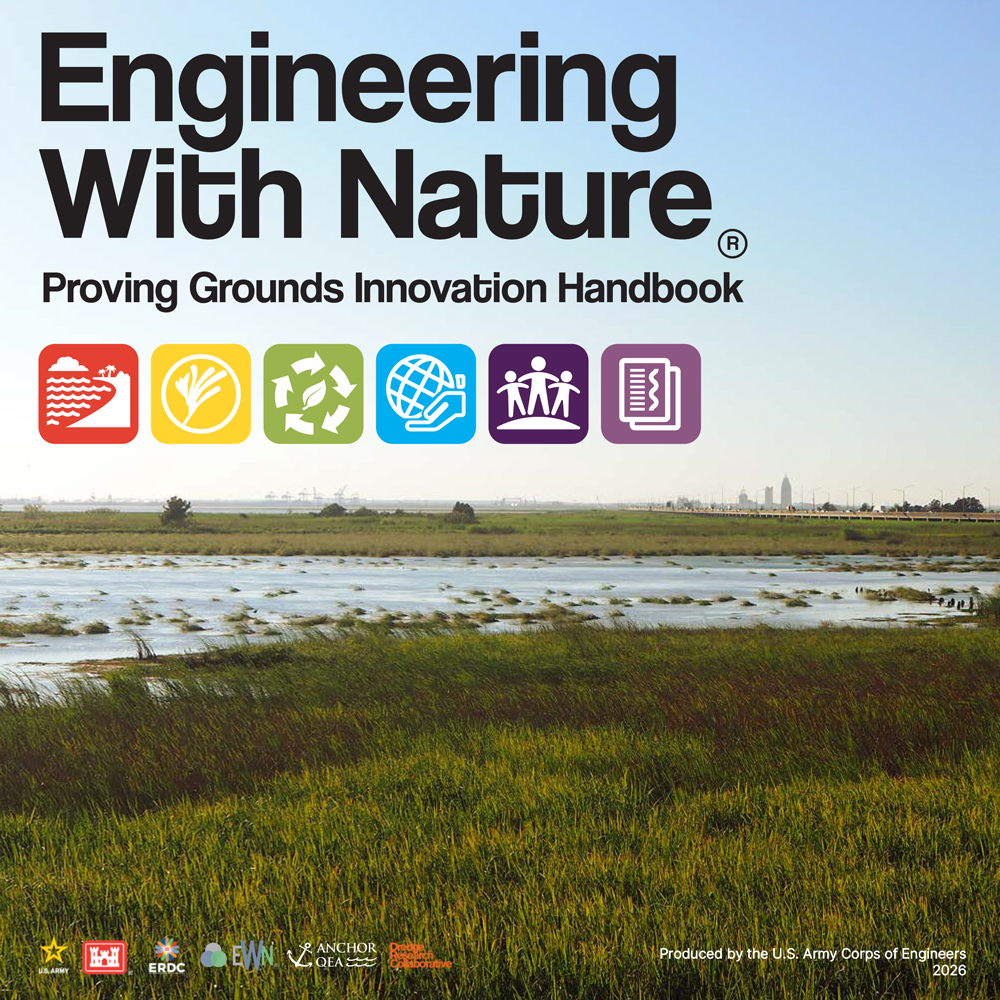
The Engineering With Nature® (EWN®) program has released a new special report, Engineering With Nature® Proving Grounds Innovation Handbook, showcasing innovative natural and nature-based solutions being explored across EWN Proving Grounds throughout the United States. Produced by the U.S. Army Engineer Research and Development Center (ERDC), the handbook highlights how engineering, science, and collaboration can […]
Research Update: New Framework for Evaluating Nature-Based Solutions Using Remote Sensing Data
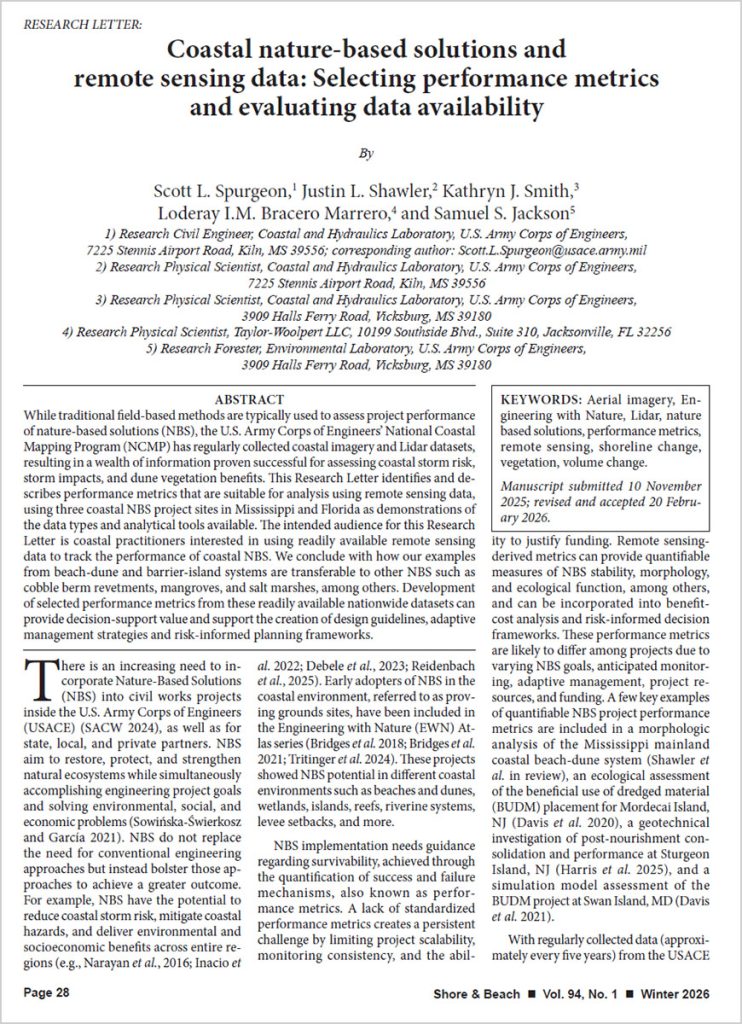
Measuring the Success of Nature-Based Solutions Nature-Based Solutions (NBS) are becoming increasingly vital for protecting our coastlines from storm damage while also providing significant environmental and socio-economic benefits. However, a major hurdle has been the absence of standardized and scalable methods to measure whether these projects are achieving their desired outcomes. Without clear performance metrics, […]
From Dredged Material to Thriving Mangroves: Florida Study Releases Key Restoration Data
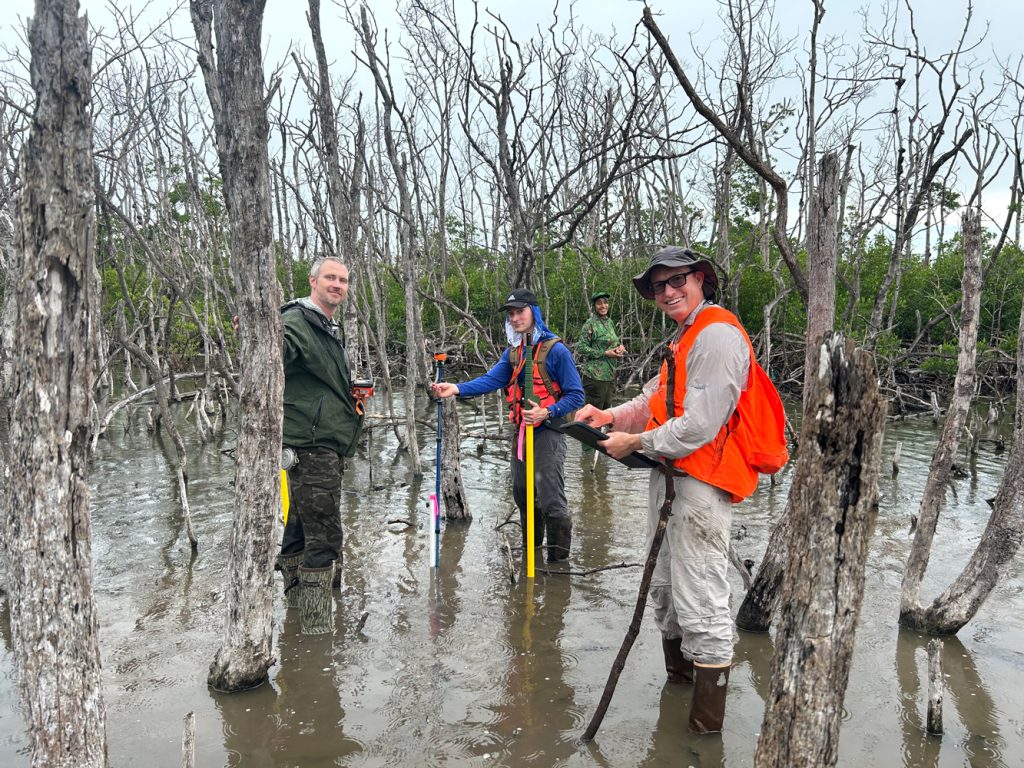
A new collection of datasets produced for the “Beneficial Use of Dredge Material in Mangrove Restoration Projects” research initiative is now available, offering crucial insights for coastal restoration efforts. This release includes five datasets that provide multi-faceted indicators to assess coastal wetland conditions and inform the design of Nature-based Solutions. Restoring a Vital Ecosystem Mangrove […]
Engineering With Nature® Announces New Publication on Advancing Environmental Management Practices
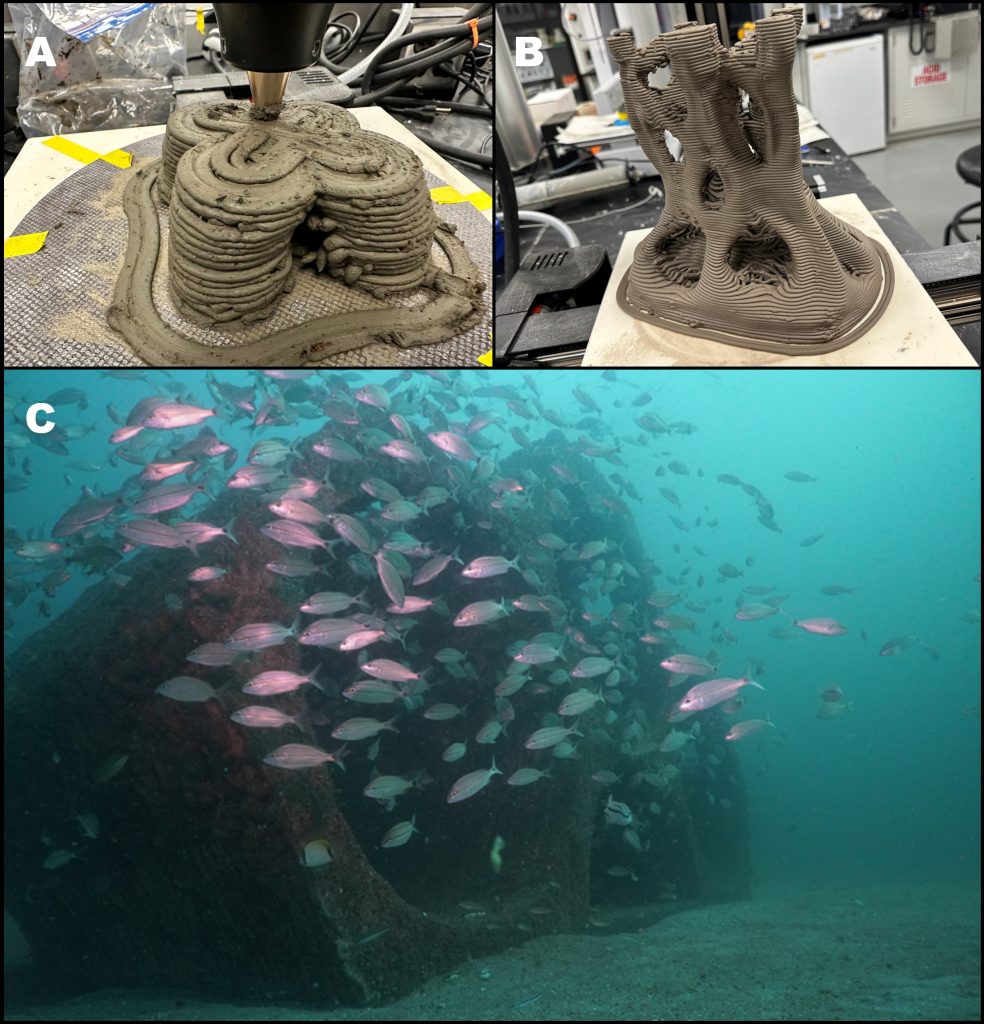
The Engineering With Nature® (EWN®) initiative is proud to share a new publication led by the U.S. Army Engineer Research and Development Center (ERDC) that explores how emerging technologies can reshape the future of coastal infrastructure. Developed by ERDC’s Environmental Laboratory (EL) and Geotechnical and Structures Laboratory (GSL), in collaboration with partners across the U.S. […]
Great Lakes Coastal Resilience Study – Lake Superior Visit
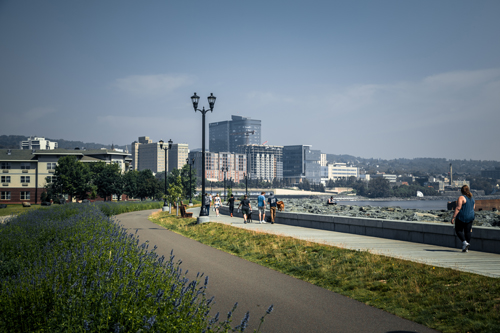
Purpose The Engineering With Nature® Playbook Project Development Team traveled to Lake Superior to view locations that offer opportunities or serve as examples of nature-based solutions to enhance coastal resiliency throughout the Great Lakes. Objectives Activities Key Take-Aways
New Engineering Practice Guides for Natural Infrastructure Now Available
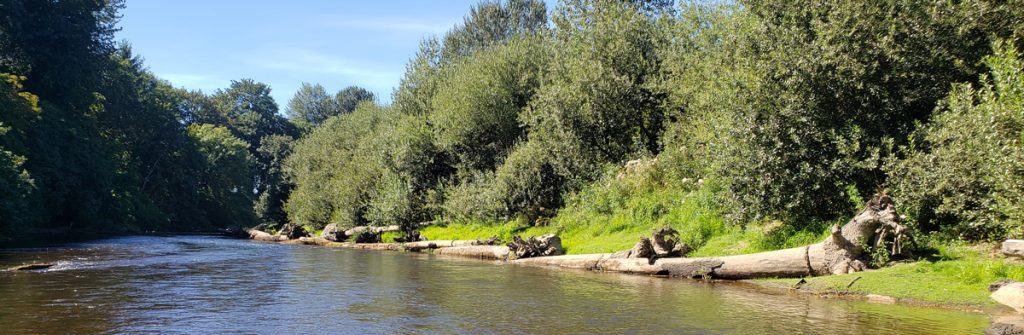
The Engineering With Nature® program is excited to introduce a new collection of Engineering Practice Guides for Natural Infrastructure—developed by the U.S. Army Corps of Engineers’ Engineer Research and Development Center (ERDC) in coordination with the Engineering & Construction Directorate. These guides offer technical direction for incorporating nature-based and hybrid (green, blue and gray) solutions […]
New Publication: Adaptive Management Framework for Nature-Based Coastal Resiliency
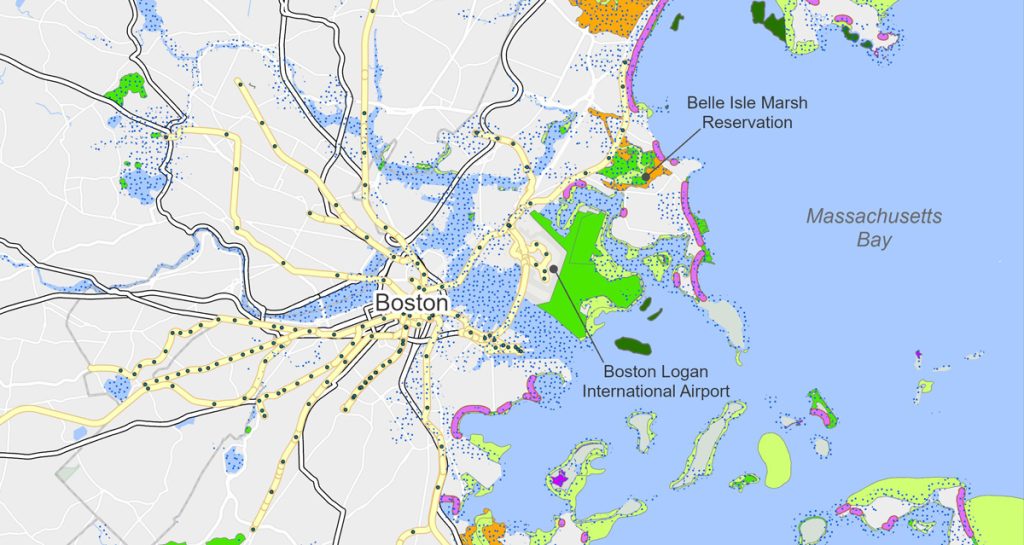
We’re excited to share the publication of a new research article titled “Application of a nature-based solution adaptive management framework for improving coastal resiliency in a highly urbanized environment” in Frontiers in Ecology and Evolution. About the Study This paper introduces and applies an adaptive management framework tailored to nature-based solutions (NBS) in densely developed […]
ERDC Showcases Coastal Innovations at USACE South Atlantic Division Summit
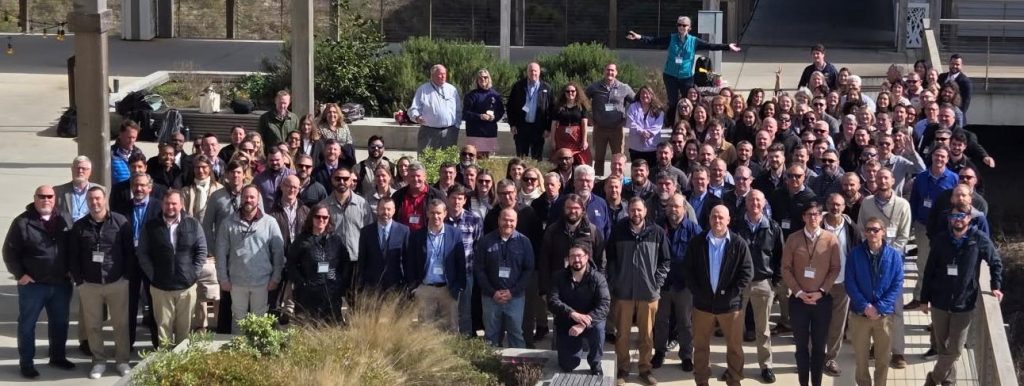
13-17 January 2025 | Gulf Shores, AL Advancing Coastal Engineering through Technology Transfer Ensuring that the latest research and development (R&D) in coastal engineering reaches field practitioners is essential for addressing our nation’s most pressing coastal challenges. Technology transfer—the process of moving innovation from the lab to the field—is a critical component of the R&D […]
New Book | Natural Infrastructure for Mission Readiness at Navy and Marine Corps Installations
The Engineering With Nature (EWN) Program is pleased to announce the release of a new book, Engineering With Nature: Natural Infrastructure for Mission Readiness at U.S. Navy and Marine Corps Installations (ERDC SR-25-1). This publication suggests practical solutions to address natural hazards at eight Navy and Marine Corps installations across the Southeastern U.S. and Hawai‘i, […]