
Growing Resilience: A Planting Event in Collins Cove, Massachusetts
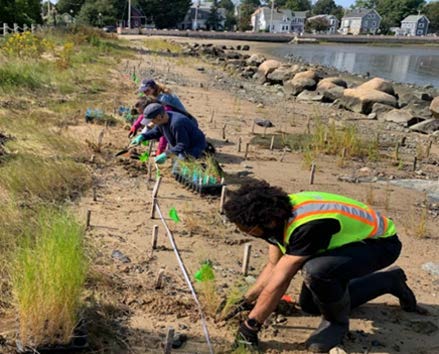
Background Coastal salt marshes are crucial ecosystems, offering flood management, nutrient retention, and biodiversity. Threatened by rising sea levels, nutrient runoff, extreme weather, and urban development, salt marsh restoration is increasingly critical. However, practitioners often face limitations in accessing locally sourced plant materials, which can better withstand a range of conditions and support coastal resiliency. […]
Assessing Shoreline Protection: A Step Forward in Nature-Based Solutions at Nolan River Lake
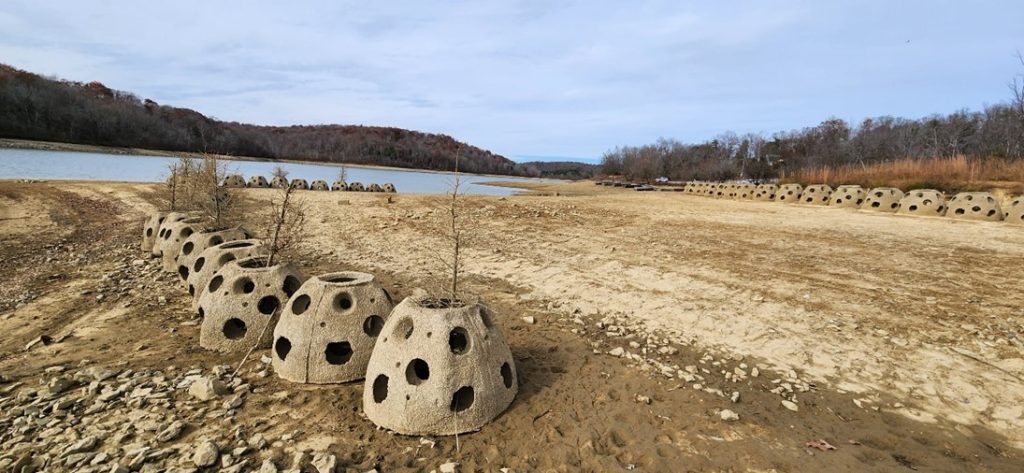
EWN researchers, Chris Haring and Autumn Murray, from ERDC Coastal and Hydraulics Laboratory (CHL) and the USACE Louisville District (LRL) engaged in site visits during the week of November 13, 2023. Their focus: evaluating existing shoreline protection methods, discussing adaptive management, and planning new projects. This initiative aims to explore alternative designs for shoreline protection, […]
Site Assessment for Future Beneficial Use of Dredged Material Placement in Coastal New Jersey
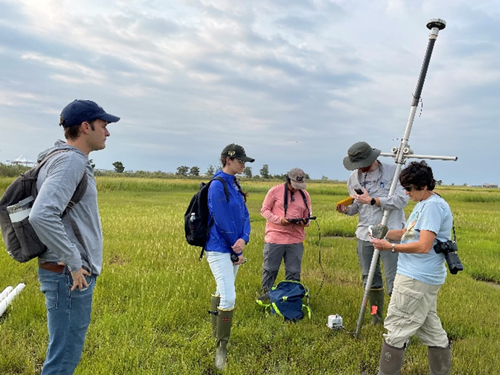
EWN researchers recently conducted a comprehensive site assessment for a forthcoming wetland Beneficial Use of Dredged Material (BUDM) placement in southern New Jersey. This research initiative, undertaken in collaboration with researchers from LSU and Villanova University, aims to support the US Army Corps of Engineers – North Atlantic Division (USACE-NAP) and The Wetland Institute in […]
EWN Earns the USACE Award for Transformative Partnership Achievements
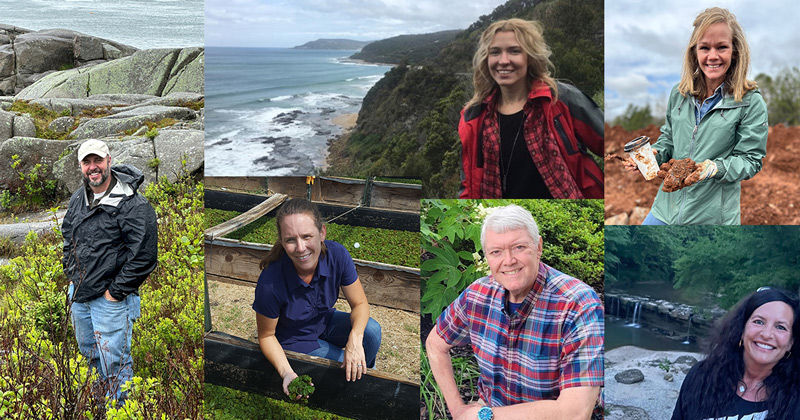
The US Army Corps of Engineers’ (USACE) Engineering With Nature® (EWN®) program has been honored with the prestigious USACE award for its remarkable achievements in leveraging partnerships. EWN stands at the forefront of transformative innovation, demonstrating the incredible potential of nature-based solutions (NBS) to enhance our nation’s infrastructure. EWN’s commitment to partnerships has been the […]
Quantifying the Efficacy of Floating Vegetated Canopies for Shoreline Protection – September 2023 Research Update
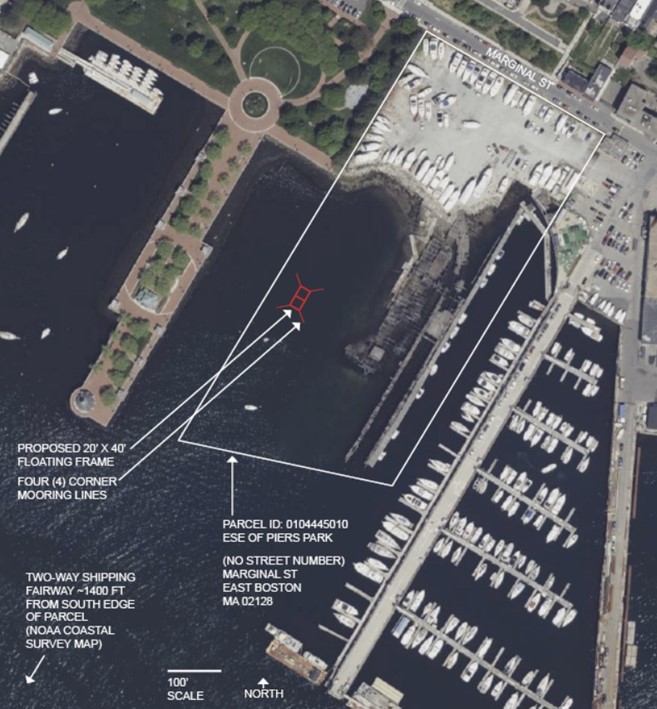
Site shift After multiple permit delays at Provincetown, MA, the team decided to leverage an existing partnership with MassPorts and selected a field site in East Boston for full network canopy deployment in Spring 2024. After a tedious process, full permits were granted for the experimental floating frame. Prototype Canopies Deployed In June 2023, the […]
Advancing Coastal Monitoring and Shaping Future SAR Satellite Systems
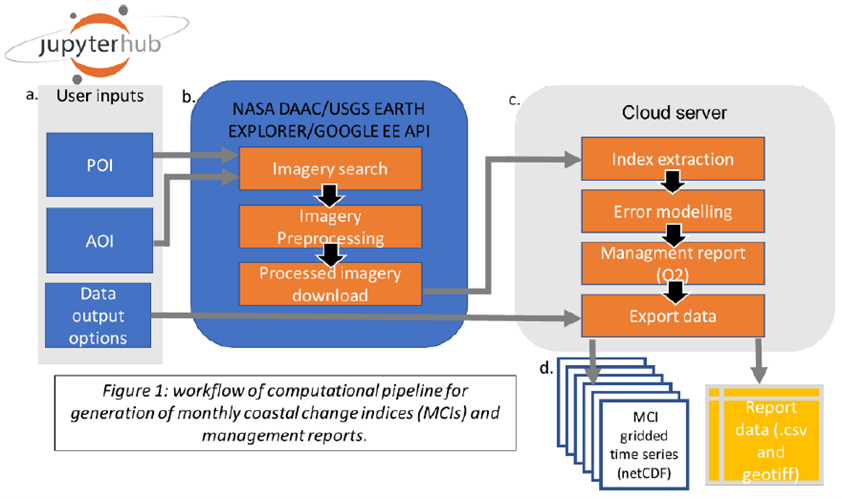
Coastal stakeholders need monitoring solutions to evaluate the effectiveness of dredged material for combating sea level rise in back-bay environments. In response, EWN researchers have partnered with Syracuse University’s Civil and Environmental Engineering Department to explore the viability of employing satellite-derived data for studying back-bay sediment nourishment, linking USACE needs with NASA’s working group tasked […]
Shoreline Stabilization and Habitat Enhancement at Nolan River Lake
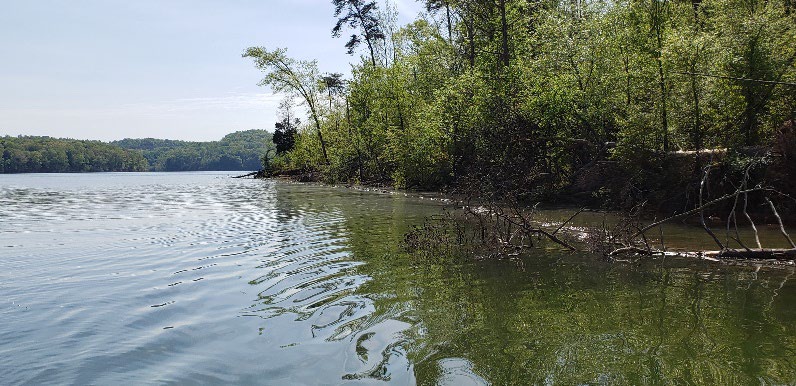
EWN researchers alongside personnel from the USACE Louisville District (LRL) Nolan River Lake, embarked on a series of site visits during the week of January 30, 2023. The objective was to conduct comprehensive assessments of existing shoreline protection strategies, discuss adaptive management approaches, and lay the groundwork for future EWN applications. One of the central […]
Researchers Collect Field Data to Understand the Long-term Performance of Dredge Material in Wetlands
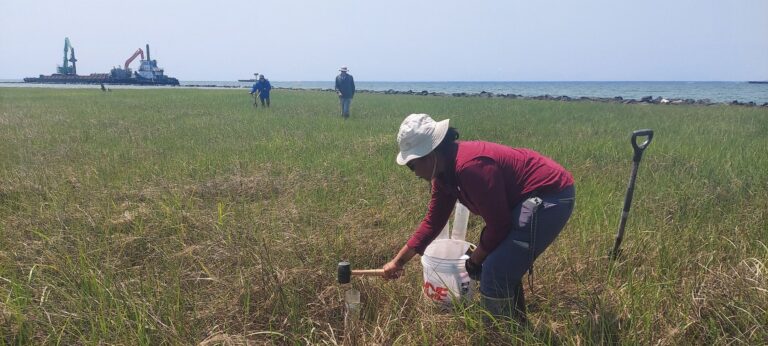
The National Centers for Coastal Ocean Science (NCCOS) recently published an article by Dr. Jenny Davis, describing the collaborative efforts of researchers visiting two dredge-material-amended islands in the Chesapeake Bay. National Centers for Coastal Ocean Science (NCCOS) researchers, in collaboration with the US Army Corps of Engineers (USACE) Baltimore District, and USACE Engineering Research and […]
EWN and University of Florida Researchers Characterize Dune Geophysical Properties
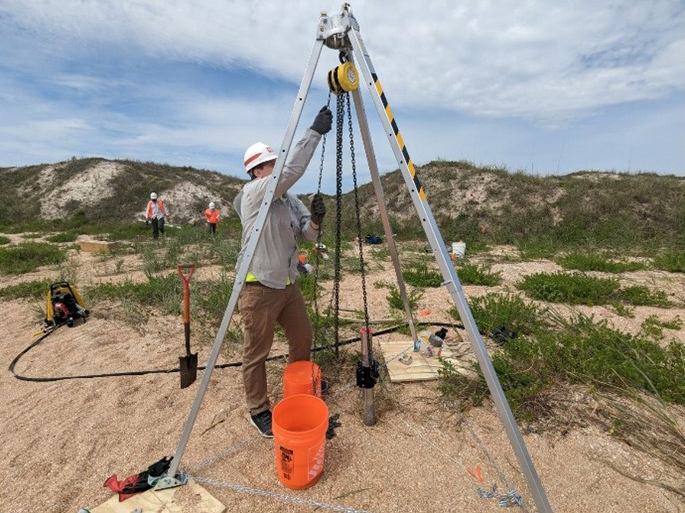
In May 2023, Drs. Justin Shawler and Brian Harris (ERDC-CHL) led a pilot field study in partnership with collaborators at the University of Florida (UF) to investigate dune geophysical properties. This research, led by Leigh Provost (ERDC-CHL) as part of the Network for Engineering With Nature (N-EWN), focuses on sand dune restoration strategies and the […]
DoW Officials Emphasize the Role of Engineering With Nature in Addressing Climate and Energy Security Challenges
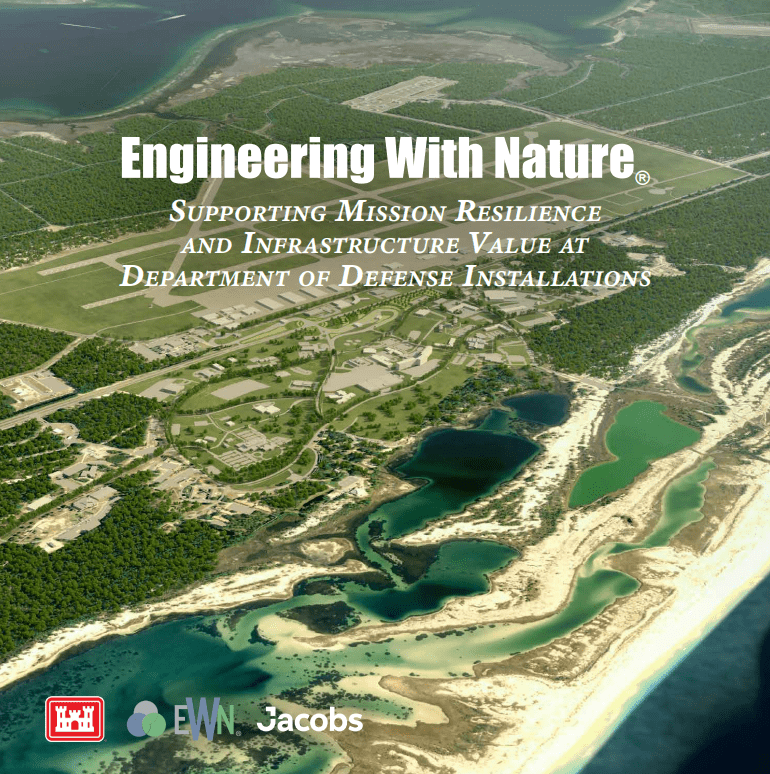
In a recent international conference, DOD officials, including Assistant Secretary of the Army for EE&I Rachel Jacobsen, highlighted the Department’s commitment to combating climate and energy security challenges. Jacobsen emphasized the Army’s use of ‘Engineering with Nature’ to enhance infrastructure resilience and collaborative efforts to develop alternative and resilient energy systems. Read the full article […]